Understanding colour blindness
Colour blindness rarely means seeing in black and white. Most colour blind people see colour, and mix up certain colours that other people tell apart. Which ones depends on the cones their eyes lack or weaken.
Your eye reads colour with three kinds of cone.
Your retina has cones tuned to long, middle and short wavelengths, roughly red, green and blue, and your brain works out colour by comparing how strongly each kind responds. When one kind is weak or missing, colours that differ only in that comparison start to look alike.
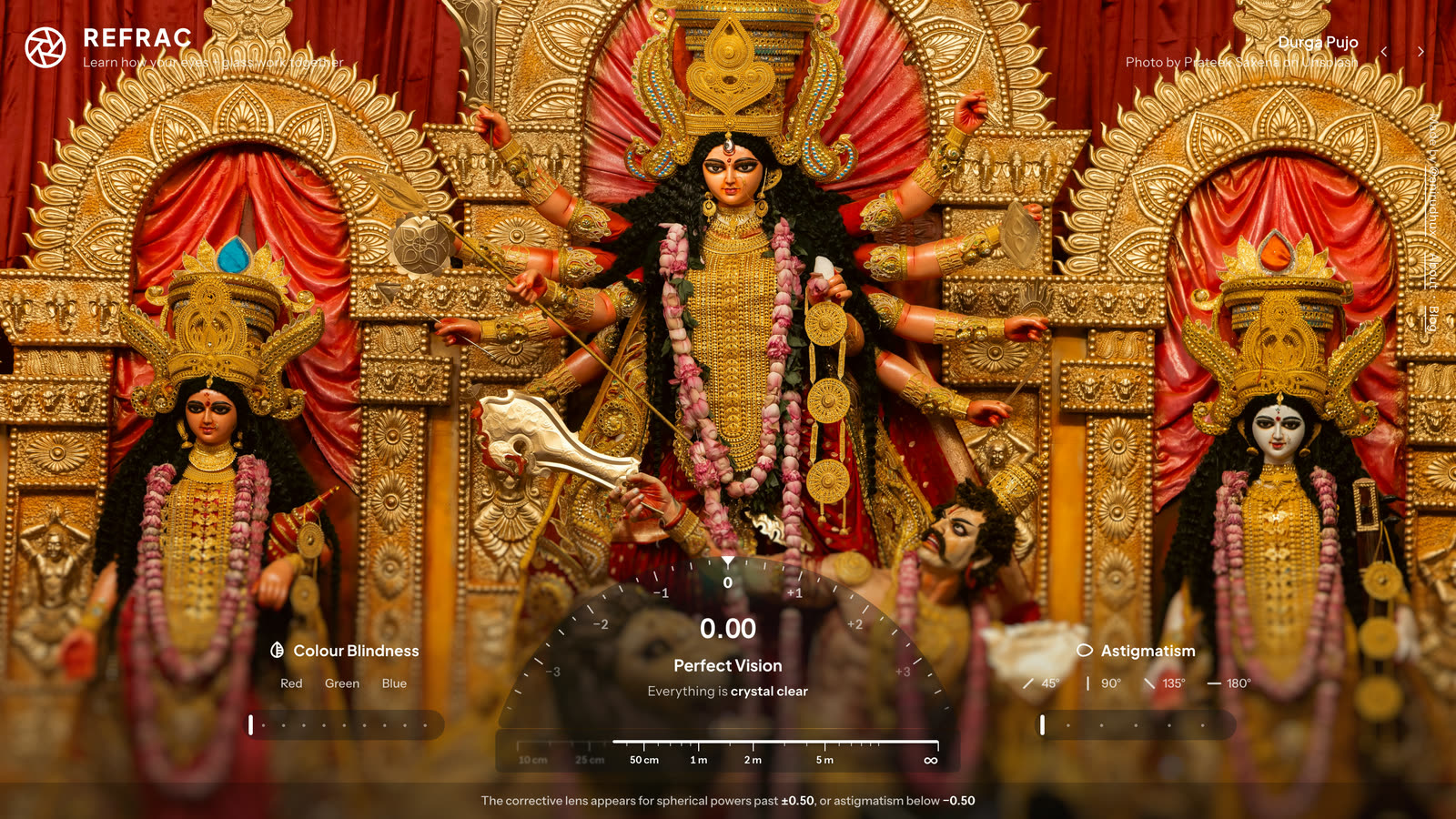
Red-green colour blindness covers most cases.
About 1 in 12 men and 1 in 200 women have it, though the numbers vary with ancestry. The genes for the red and green cones are on the X chromosome, and since men have only one X, a single faulty copy is enough.
The most common kind is deuteranomaly, a weak green cone, where greens and reds drift toward each other and olive, brown and dull green blur together. Protanomaly weakens the red cone instead, so reds also look darker, and a red light can seem dim.
When the eye lacks a cone type entirely, the name changes from -anomaly to -anopia, as in deuteranopia or protanopia. The mix-ups get worse, but blues and yellows still look clear.
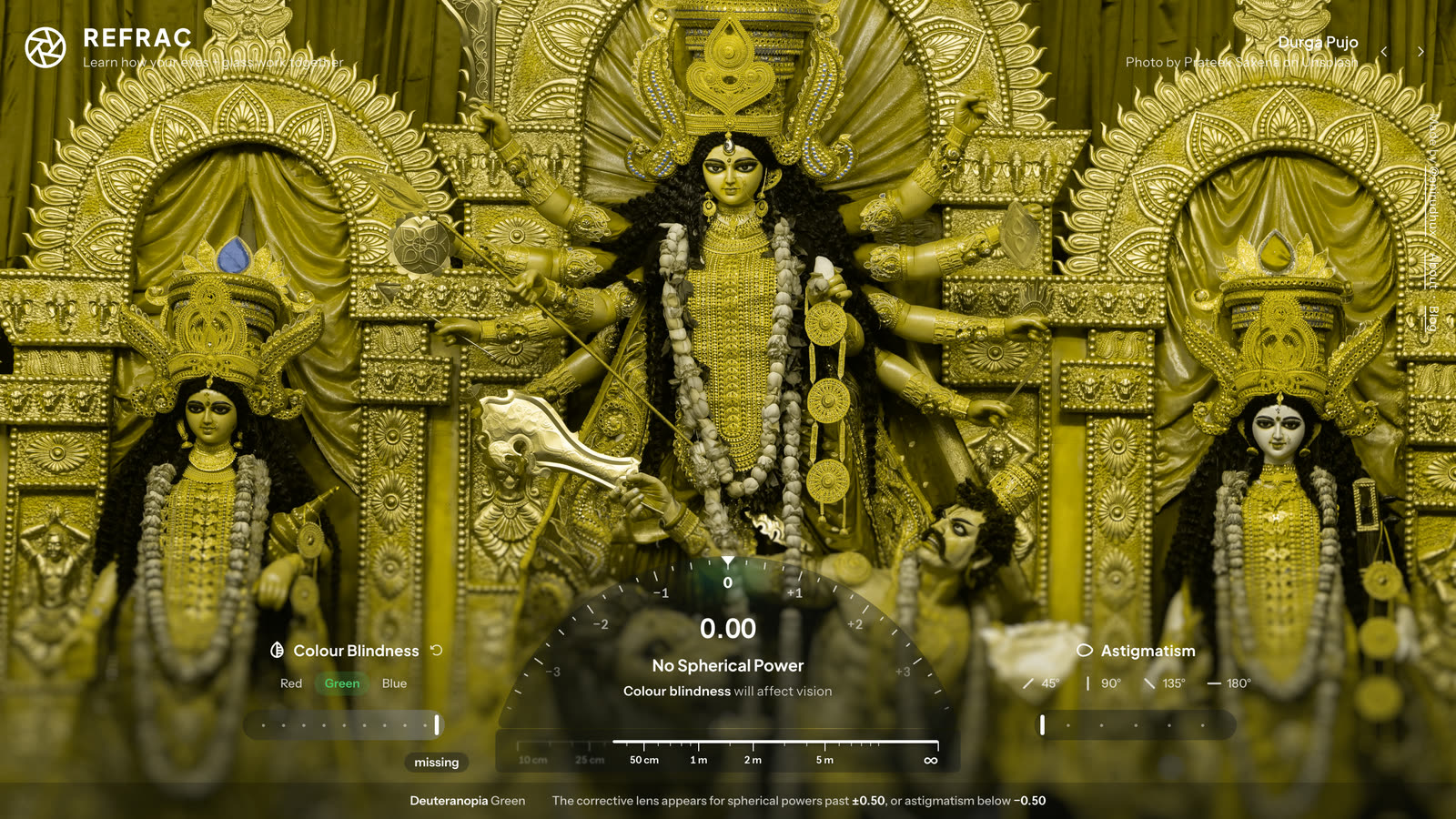
Blue-yellow colour blindness is rare.
Tritanomaly and tritanopia affect the blue cones, so blues and greens run together, as do yellows and pinks. Its gene isn’t on the X chromosome, so men and women get it equally, and fewer than 1 in 10,000 people have it.
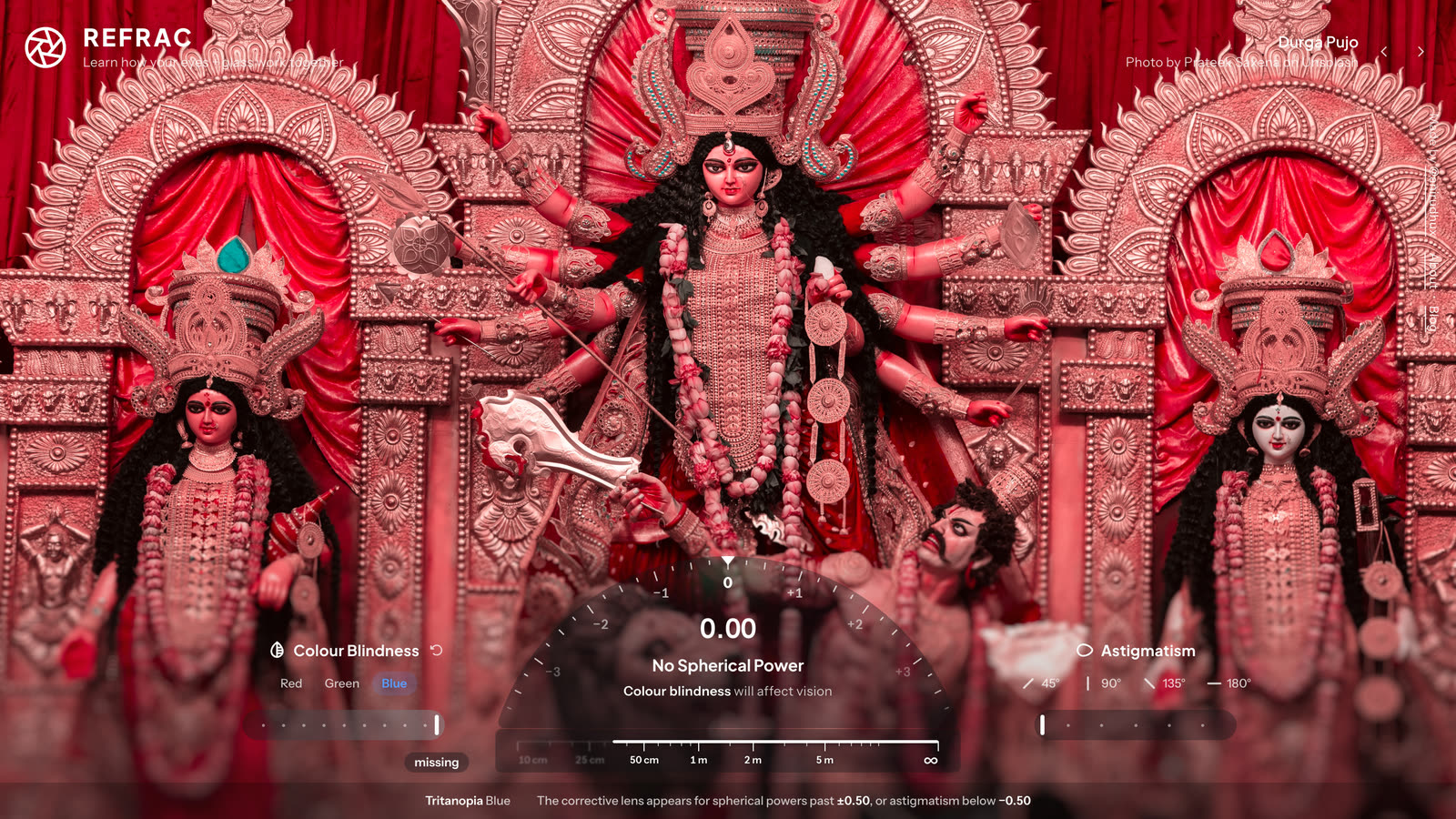
Most people find out from a circle of dots.
The Ishihara test hides a number in a circle of coloured dots, which a typical eye reads straight away and a colour blind eye reads as a different number, or can’t find at all. Plenty of people only learn they’re colour blind from this test, since the world has always looked this way to them.
No lens brings the colour back.
Glasses can’t add a cone your eye lacks. Filter glasses like EnChroma’s cut a narrow band of light where the red and green cones overlap, which helps some people with a weak cone tell reds from greens. They do nothing for an eye missing a cone, and they never restore typical colour vision. For the same reason, the lens in Refrac never comes up for colour blindness on its own.
See a scene through each kind.
Open Refrac, pick Red, Green or Blue in the Colour Blindness panel and slide it toward full. I’d start with Durga Pujo, where the reds and golds show the difference best.